Private Enterprise AI: From Adoption to Advantage
AI adoption is becoming mainstream, but competitive advantage will come from how effectively enterprises connect AI to their proprietary data, knowledge, and workflows. Private Enterprise AI enables organizations to turn AI from a productivity tool into a secure, scalable capability that accelerates decisions, strengthens governance, and reshapes how work gets done.
 |  |  |
AI is everywhere. Competitive advantage is not.
AI adoption has reached the mainstream. But for CEOs, adoption is no longer the measure that matters.
The real challenge is turning AI from a collection of pilots and productivity tools into a secure, scalable enterprise capability that creates measurable business value.
That is where Private Enterprise AI enters the conversation.
89%
of organizations now use AI in at least one business function.
Yet only around 6% are considered AI high performers—organizations attributing at least 5% of EBIT to AI while reporting significant business impact.
The message for leaders is clear:
Using AI is becoming common. Creating value from it remains difficult.
The advantage is not the model
As access to advanced AI becomes increasingly democratized, the technology itself will be difficult to differentiate on.
The more defensible advantage sits inside the enterprise:
Proprietary data. Institutional knowledge. Customer relationships. Operating processes. Industry expertise.
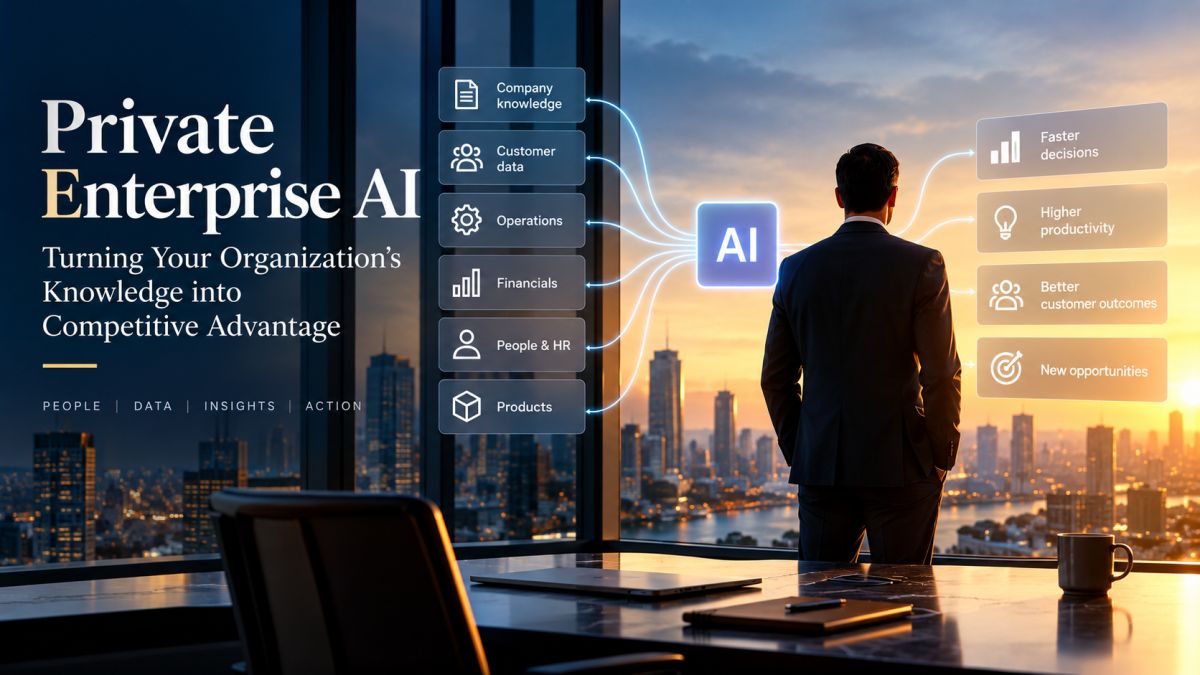
Private Enterprise AI brings these assets together with modern AI capabilities in a controlled environment—allowing employees to access and act on enterprise intelligence while protecting sensitive information and respecting existing permissions.
Instead of deploying another isolated chatbot, the ambition is to create an intelligence layer across the organization.
72%
of CEOs say they are now the main decision maker on AI.
BCG's 2026 AI Radar found that AI transformation is increasingly shifting from a CIO-led technology initiative to a CEO-led strategic priority. Companies also expect AI investment to roughly double in 2026.
That shift matters because scaling AI is not primarily a technology challenge.
It requires decisions about where to compete, which processes to redesign, what data to unlock, how employees work, and where human oversight remains essential.
From productivity to operating model
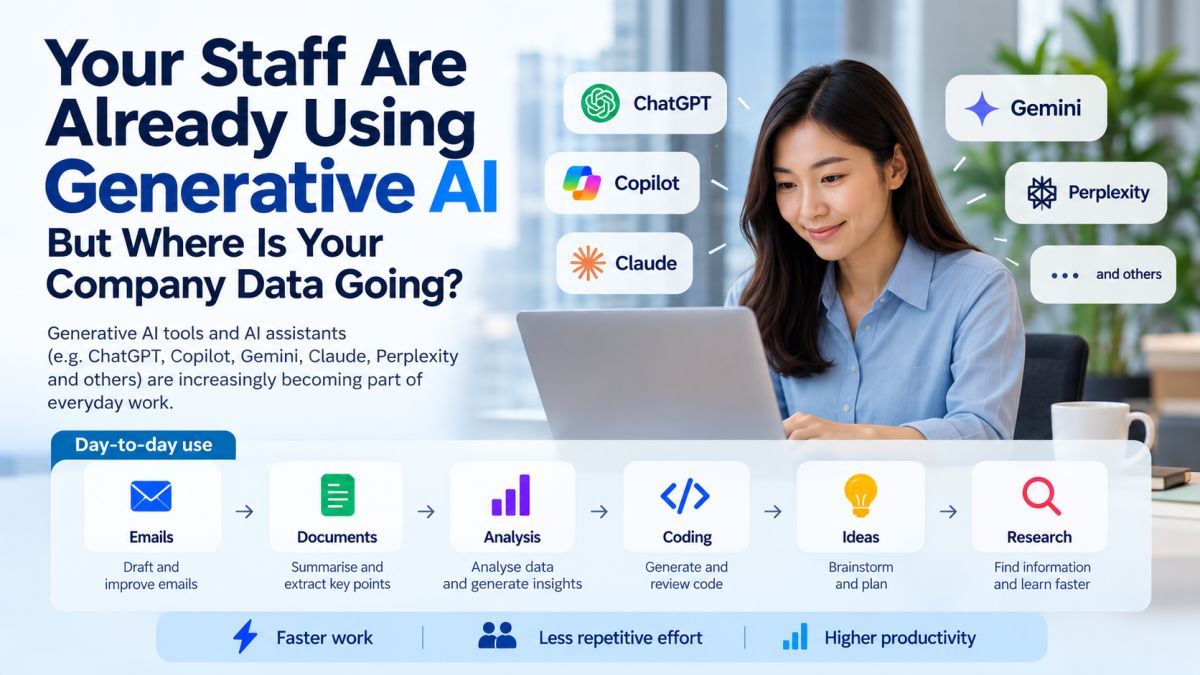
The first wave of enterprise AI focused largely on individual productivity: drafting, summarizing, searching, and coding.
The next opportunity is larger.
Private Enterprise AI can connect knowledge and workflows across the business:
Faster decisions
Bring together information that currently sits across documents, systems, and teams.
Scalable expertise
Make institutional knowledge available beyond the individuals who hold it today.
Intelligent automation
Move from generating answers to executing defined workflows with appropriate human controls.
Enterprise control
Maintain governance over data access, security, auditability, and AI actions.
6%
Only a small minority of companies are currently generating meaningful value from AI at scale.
The opportunity, therefore, is not to deploy AI everywhere.
It is to identify the few areas where AI can fundamentally improve how the organization operates—and redesign those areas around it.
The CEO agenda
Private Enterprise AI changes the leadership question.
Not:
“Which AI tools should we buy?”
But:
“Where can our proprietary knowledge, combined with AI, create an advantage competitors cannot easily replicate?”
The companies that answer that question well will move beyond AI experimentation.
They will build organizations that learn faster, decide faster, and execute faster.
And that may ultimately be the real competitive advantage of enterprise AI.